
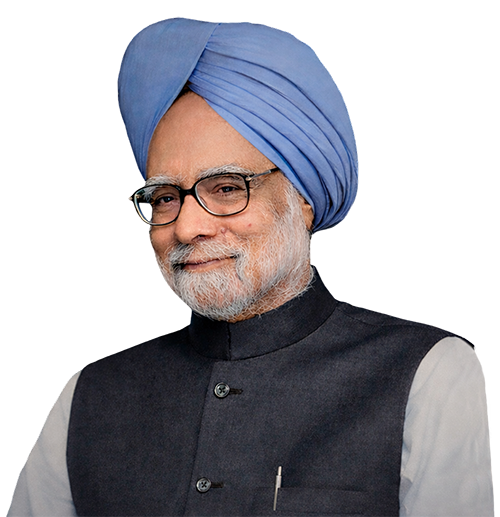
Dr. Manmohan Singh was born in 1932 in Gah village in Punjab province of undivided India. From an early age he was interested in academics and excelled in both school and college. In 1954 he completed his Masters in Economics from Panjab University, and went to St. John's College, University of Cambridge, for his Tripos (1955-57). Returning to Panjab University as a Lecturer, he took a break from teaching to pursue a doctorate at Nuffield College, University of Oxford (1960-62). His book, India's Export Trends and Prospects for Self-Sustained Growth (Clarendon Press, Oxford, 1964), was based on his DPhil thesis.
Dr. Singh joined the United Nations Conference on Trade and Development in New York in 1966. Less than four years later he left to take up a Professorship at the prestigious Delhi School of Economics, thus firmly establishing his academic credentials.
The next phase of his career was with the Government of India. His initial appointment as Economic Adviser in the Ministry of Foreign Trade in 1971 led to the key positions of Chief Economic Advisor and Secretary Economic Affairs in the Ministry of Finance. In 1980 he took over as Member-Secretary of the Planning Commission. Following two-and-a-half years as the Governor of the Reserve Bank of India (1982-85), Dr. Singh returned to the Planning Commission, this time as its Deputy Chairman. Thus, in a span of about fifteen years, he gained considerable experience of the economic and development sectors in India. His assignment as the first Secretary-General of the newly established South Commission based in Geneva (1987-90), gave him a global perspective on the social, economic, and political issues facing developing countries across the world.
Dr. Manmohan Singh entered politics in 1991 as a member of the Indian National Congress. Appointed as Finance Minister of India by the then Prime Minister Shri P.V. Narasimha Rao, Dr. Singh launched a series of radical measures to revive and reform the Indian economy. His tenure as Finance Minister (1991-96) is considered path-breaking in India’s economic history. Despite subsequent changes of government, the reform process continued.
During his tenure as Finance Minister Dr. Singh was a member of the Rajya Sabha, the upper house of Parliament. He remained a Member of Parliament thereafter and served as Leader of the Opposition in the Rajya Sabha from 1998 to 2004.
In 2004 Dr. Manmohan Singh was sworn in as the fourteenth Prime Minister of India, heading a coalition government of political parties led by the Indian National Congress. Five years later, the coalition was voted back to power and Dr. Singh was sworn in for a second term as Prime Minister. He remained in office till 26 May 2014.
Dr. Manmohan Singh continued to serve as a Member of Parliament in the Rajya Sabha until 3 April 2024.
He passed away in New Delhi on 26 December 2024.
The Dr. Manmohan Singh Trust was established as a public charitable Trust in 1998. Its original corpus was created from the royalties of India's Economic Reforms and Development: Essays for Manmohan Singh. This Festschrift edited by Isher Judge Ahluwalia and I.M.D. Little was published by Oxford University Press in 1998. The founder trustees were Dr. Manmohan Singh, Dr. Isher Judge Ahluwalia, Prof. Ian Little, Mr. Shardul S. Shroff, and Mr. Manzar Khan (then managing director of OUP). Dr. Manmohan Singh was the first Chairperson of the Trust. He stepped down as a trustee when he became Prime Minister of India in 2004.
The mission of the Trust was to encourage higher education and research in economics and allied fields. Given the importance of the Delhi School of Economics as a premier institution for the study of economics in India – and one with which Dr. Singh was closely associated – the Trust introduced fellowships for meritorious postgraduate students in the Economics Department. The fellowships have continued uninterrupted since 1998.
After Dr. Manmohan Singh passed away on 26 December 2024, the Trust was reconstituted. Its present trustees are Prof. Upinder Singh (Chairperson), Mr. Montek Singh Ahluwalia, Mr. Shardul S. Shroff, and Ms. Daman Singh. The Trust has since redefined its mission to honour the legacy of Dr. Singh.
The Trust has founded an annual public lecture in memory of Dr. Singh. The Dr. Manmohan Singh Memorial Lectures are to be delivered by distinguished leaders and thinkers from India and abroad. The inaugural lecture was by Dr. Angela Merkel, former Chancellor of the Federal Republic of Germany, in New Delhi on 26 February 2026.
Scholarships and prizes were crucial to Dr. Singh’s education, which provided the foundation of his professional career. The Trust has thus extended its fellowship programme to three more academic institutions, with a special emphasis on underprivileged students. It has also introduced an awards programme for meritorious postgraduate students.
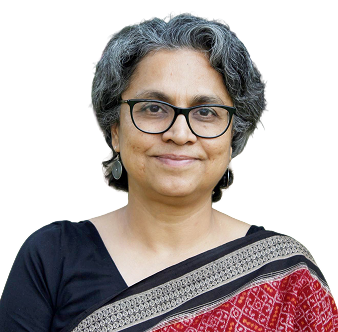
Upinder Singh is Professor of History at Ashoka University, Sonepat. She studied in St. Stephen’s College for her BA (Honours) degree and obtained her MA and MPhil in History from the University of Delhi.
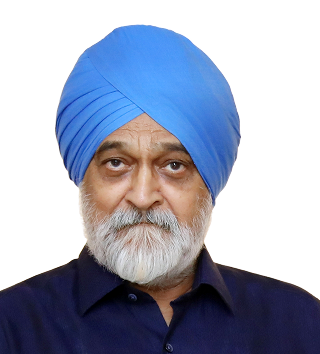
Montek Singh Ahluwalia is an eminent economist & former civil servant. He received his BA (Honours) degree in Economics from St. Stephen’s College, University of Delhi.
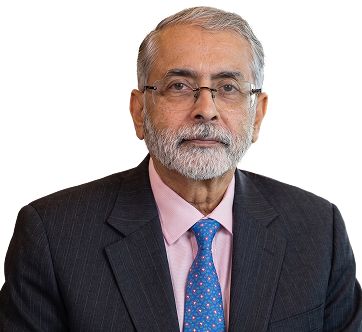
Dr. Shardul S. Shroff is the Founder and Executive Chairman of Shardul Amarchand Mangaldas, a leading law firm in India. Dr. Shroff oversees his firm’s major litigation, regulatory and transaction work.
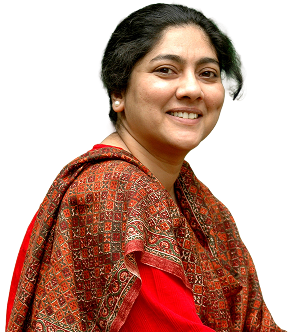
Daman Singh graduated in Mathematics from St. Stephen's College, University of Delhi, in 1984 and went to the Institute of Rural Management Anand for further studies.
Upinder Singh is Professor of History at Ashoka University, Sonepat. She studied in St. Stephen’s College for her BA (Honours) degree and obtained her MA and MPhil in History from the University of Delhi. She obtained her PhD degree from McGill University, Montreal. Singh taught in St. Stephen’s College, where she was Head of the History Department (1999-2004), and in the History Department of the University of Delhi, where she served as Head of Department (2014-17). In 2018, she joined Ashoka University where she served as Dean of Faculty (2019-2022).
Prof. Singh’s academic interests range over various aspects of ancient Indian history and archaeology, political ideas and practice, and India’s interactions with the wider world. Her books include Ancient Delhi, The Discovery of Ancient India: Early Archaeologists and the Beginnings of Archaeology, A History of Ancient and Early Medieval India: From the Stone Age to the Twelfth Century, The Idea of Ancient India: Essays on Religion, Politics, and Archaeology, Political Violence in Ancient India, Ancient India: Culture of Contradictions, and The World of India’s First Archaeologist: Letters from Alexander Cunningham to J.D.M. Beglar.
She is on the editorial boards of several renowned historical journals. She was awarded the Infosys Prize in Social Sciences - History in 2009.
Montek Singh Ahluwalia is an eminent economist and former civil servant. He received his BA (Honours) degree in Economics from St. Stephen’s College, University of Delhi. He was a Rhodes Scholar at Oxford University, where he obtained his MA and MPhil degrees.
Mr. Ahluwalia worked at the World Bank before joining the Government of India in 1979. He served as Special Secretary to Prime Ministers Rajiv Gandhi and V. P. Singh, and as Secretary Commerce. When radical economic reforms were launched in 1991, he took over as Secretary Economic Affairs in the Ministry of Finance, and continued as Finance Secretary till 1998. He then served as Member of the Planning Commission and of the Economic Advisory Council to the Prime Minister. In 2001 he joined the International Monetary Fund as Director of the newly-created Independent Evaluation Office. In 2004 Mr. Ahluwalia returned to India as Deputy Chairman of the Planning Commission, a position he held till 2014.
Mr. Ahluwalia is currently a Distinguished Fellow of the Centre for Social and Economic Policy (CSEP) and a member of the Board of the Council on Energy, Environment and Water (CEEW) in New Delhi. He writes and speaks extensively on national and international economic issues. He has co-authored the book Redistribution with Growth, and is the author of Backstage: The Story of India’s High Growth Years.
In 2011, he was awarded the Padma Vibhushan, India's second highest civilian award, by the President of India for his outstanding contribution to economic policy and public service.
Dr. Shardul S. Shroff is the Founder and Executive Chairman of Shardul Amarchand Mangaldas, a leading law firm in India.
His decades of experience span a wide spectrum of law including Mergers and Acquisitions, financial regulatory practice, Insolvency and Bankruptcy Code, commercial litigation and arbitration, capital markets, disinvestments, banking and finance. Dr. Shroff oversees his firm’s major litigation, regulatory and transaction work. He is also responsible for the new practices at the firm such as Environmental, Social, and Governance, Artificial Intelligence and Technology, Media, and Telecommunications.
Dr. Shroff has been involved in major litigations in recent times for insolvency matters pending in the Supreme Court of India. He has contributed to the jurisprudence of Insolvency Law in India, as well as Company Law and Arbitration Law, among others. He has served as a key member of two Government of India committees – the Insolvency Law Committee and the Company Law Committee (2022-23)– which continuously review the laws of insolvency and company law in India.
Among numerous recognitions, Dr. Shroff has received the ‘National Law Day Award’ from the President of India for his unique contribution to the field of corporate law and leadership in its practice, and for being instrumental in the advancement of India’s corporate law practice to international standards.
Daman Singh graduated in Mathematics from St. Stephen’s College, University of Delhi, in 1984 and went to the Institute of Rural Management Anand for further studies. For the next twenty years she worked in the non-profit sector in various capacities: as a program manager, a researcher, and as a freelance consultant. She specialized in the field of rural livelihoods, natural resource management, the interface between development and environment, and the management of non-government organisations.
In 2007 she became a full-time writer. A natural extension of her education and professional experience, writing enables her to explore a wide canvas of subjects, and to engage with a large community of readers. She is the author of three novels: Nine by Nine, The Sacred Grove, and Kittyʼs War. She has also written three works of non-fiction: The Last Frontier: People and Forests in Mizoram, Asylum: the Battle for Mental Healthcare in India, and a biography of her parents titled Strictly Personal: Manmohan & Gursharan.