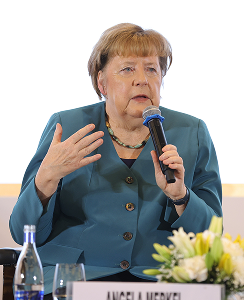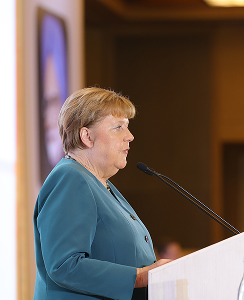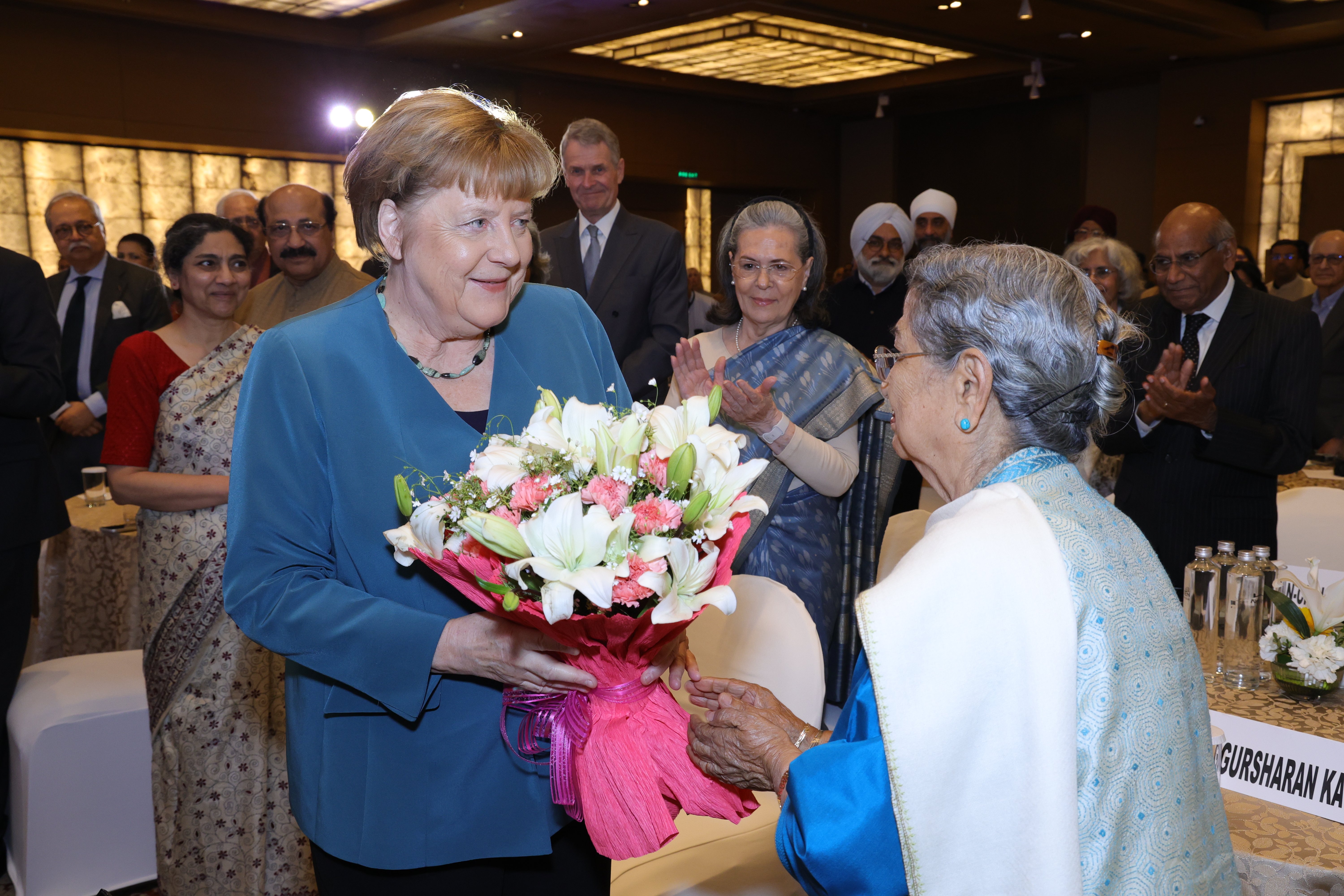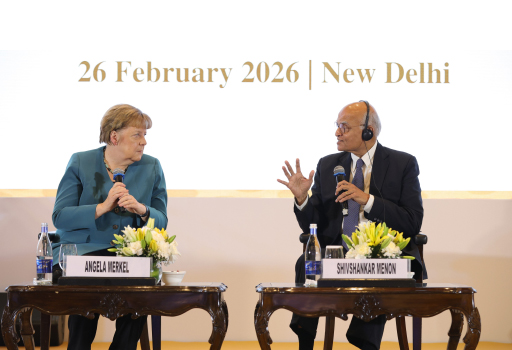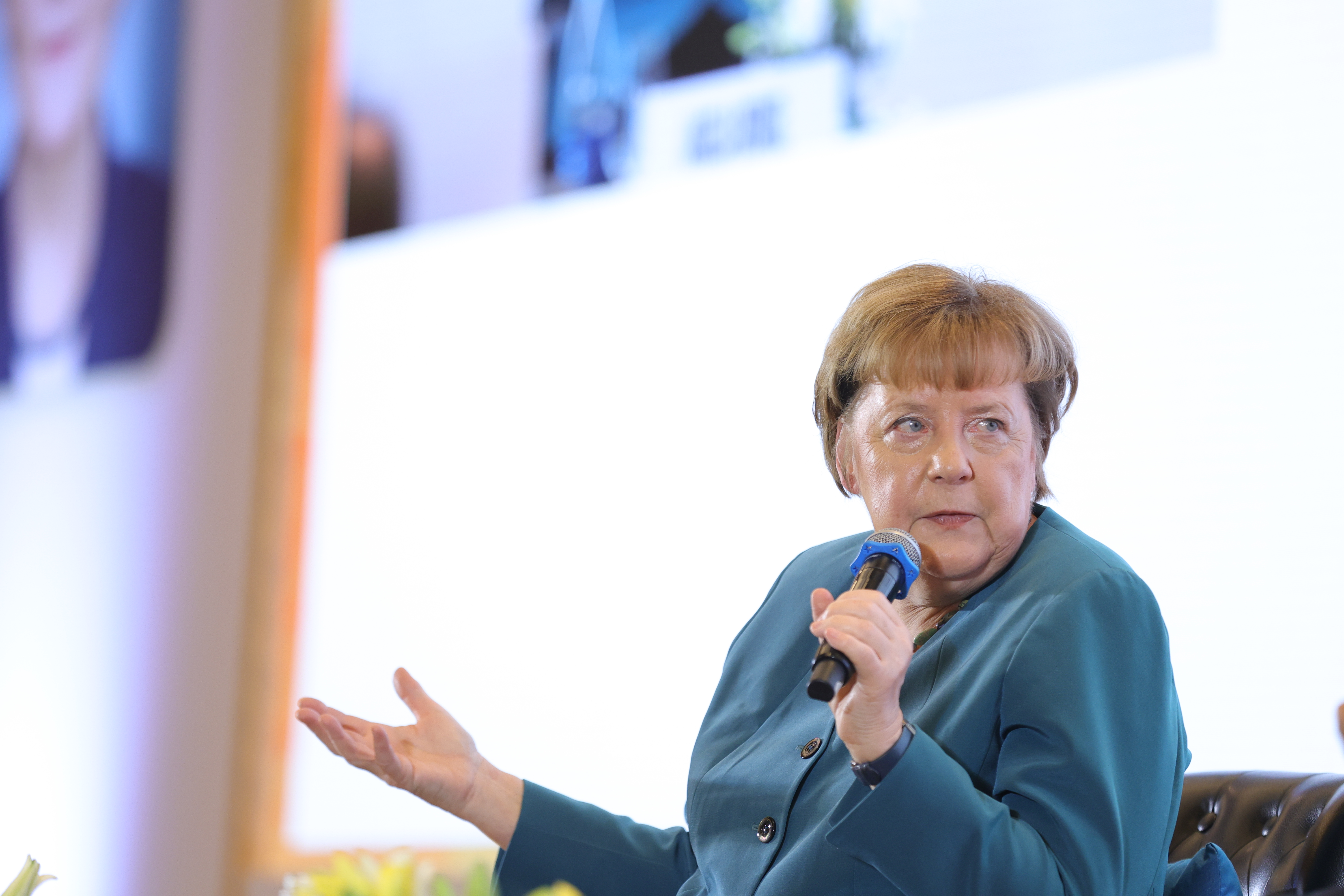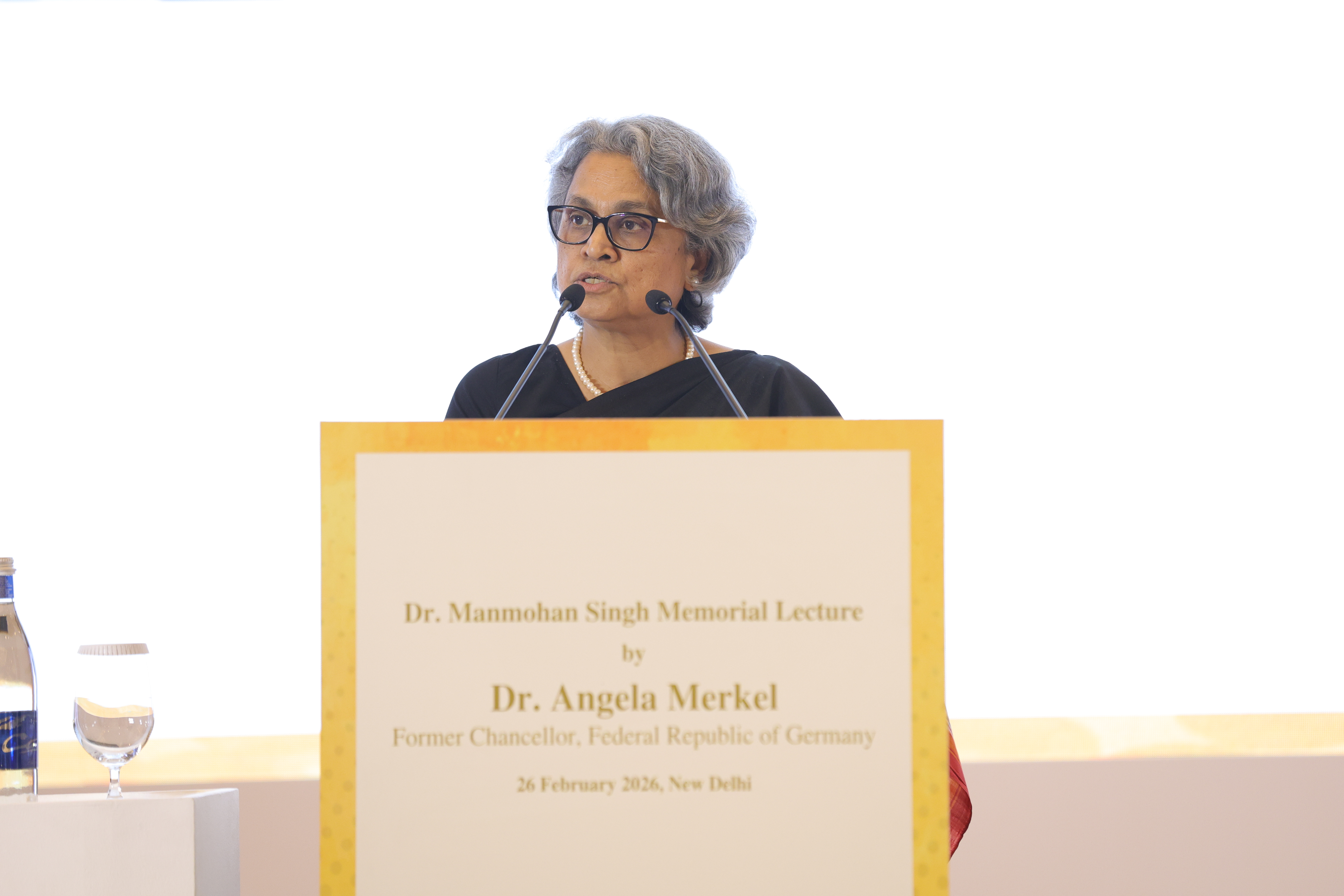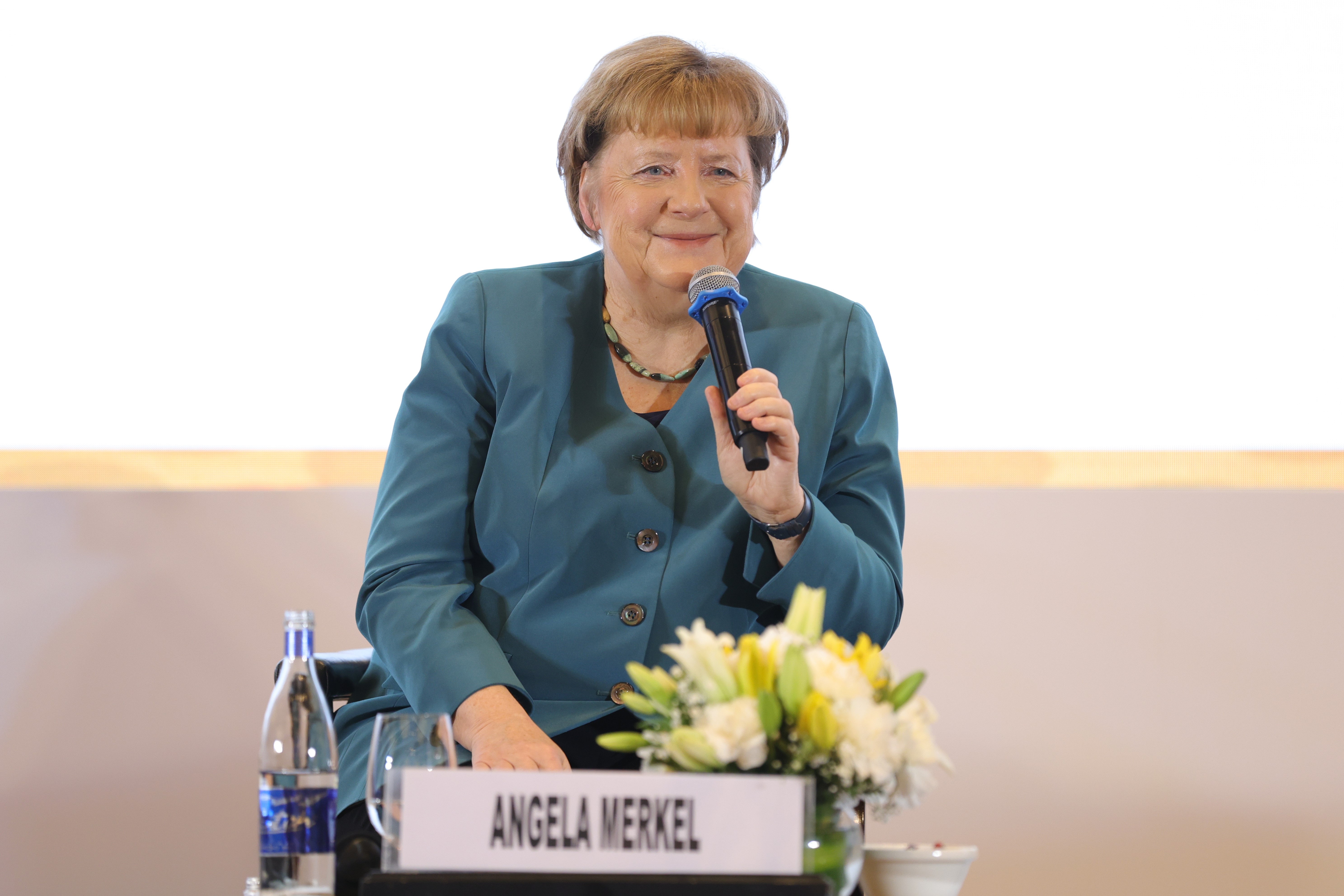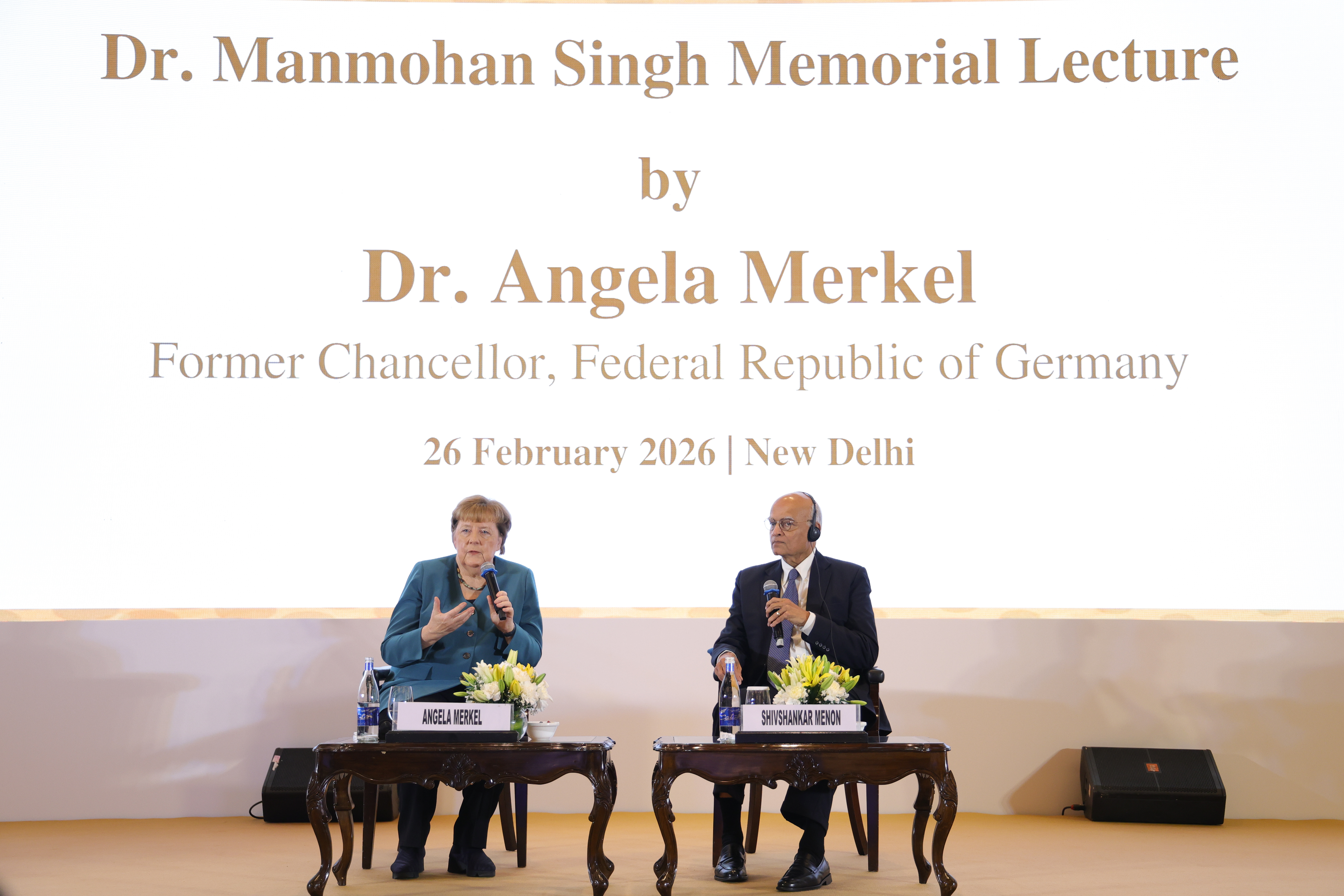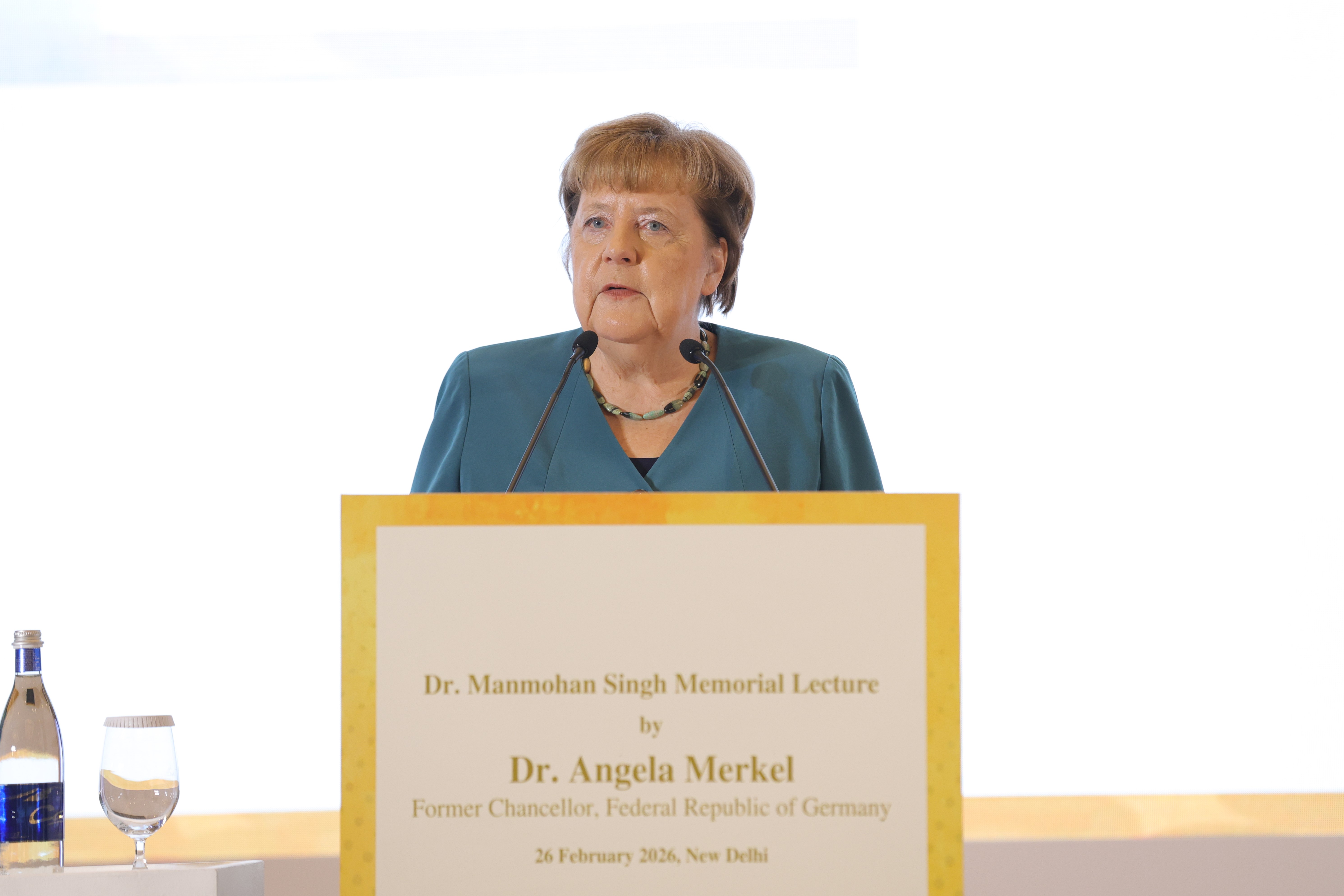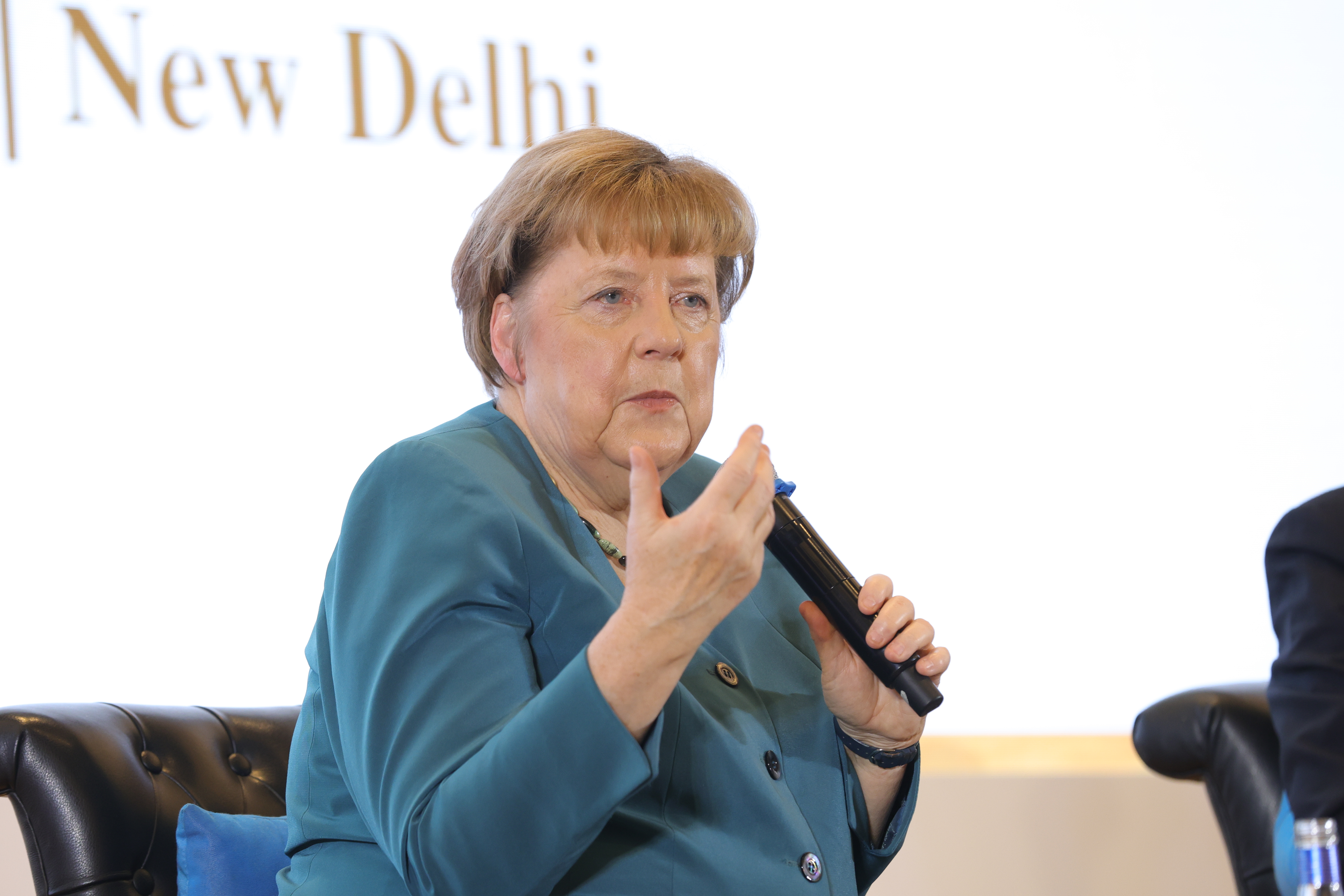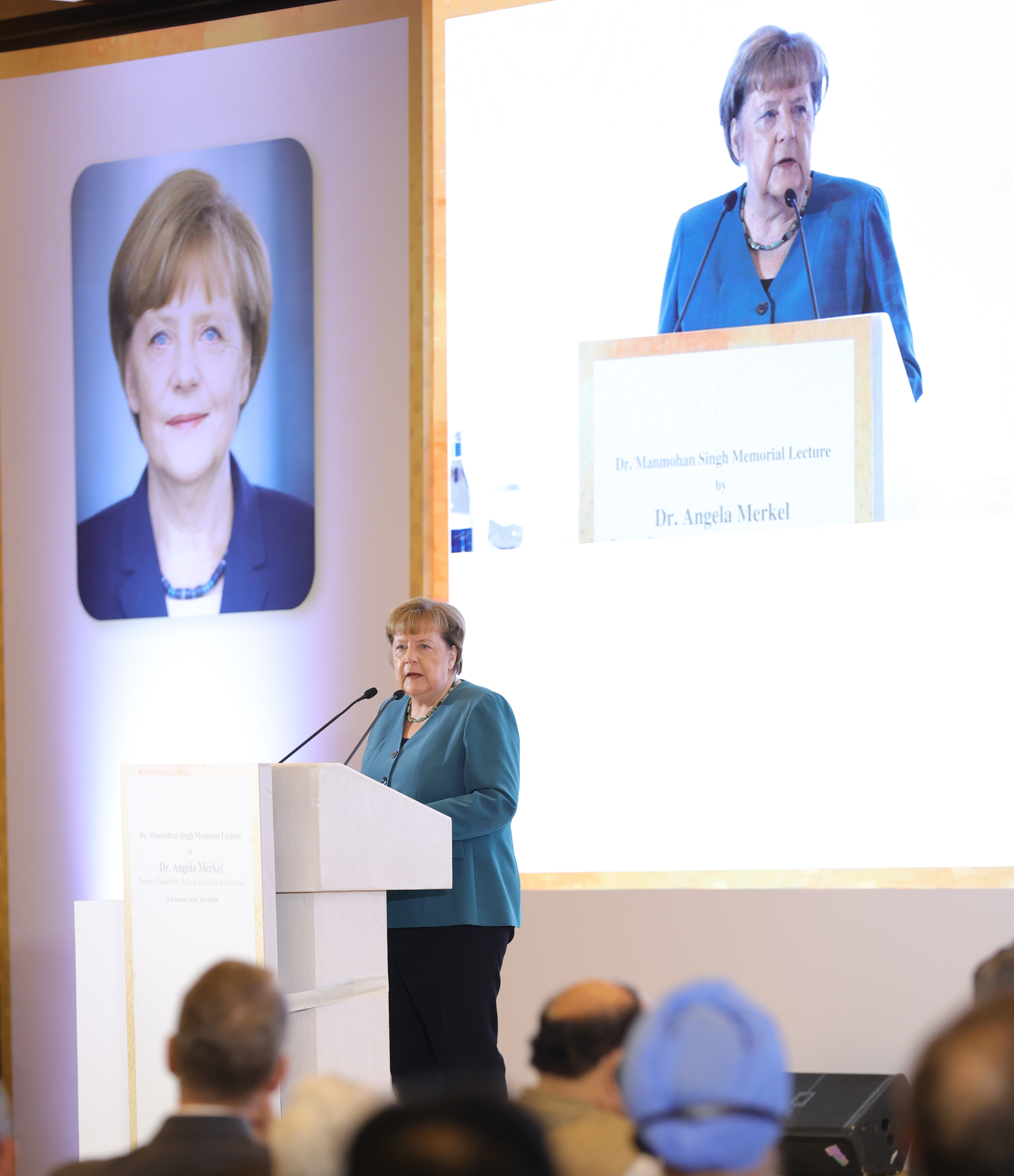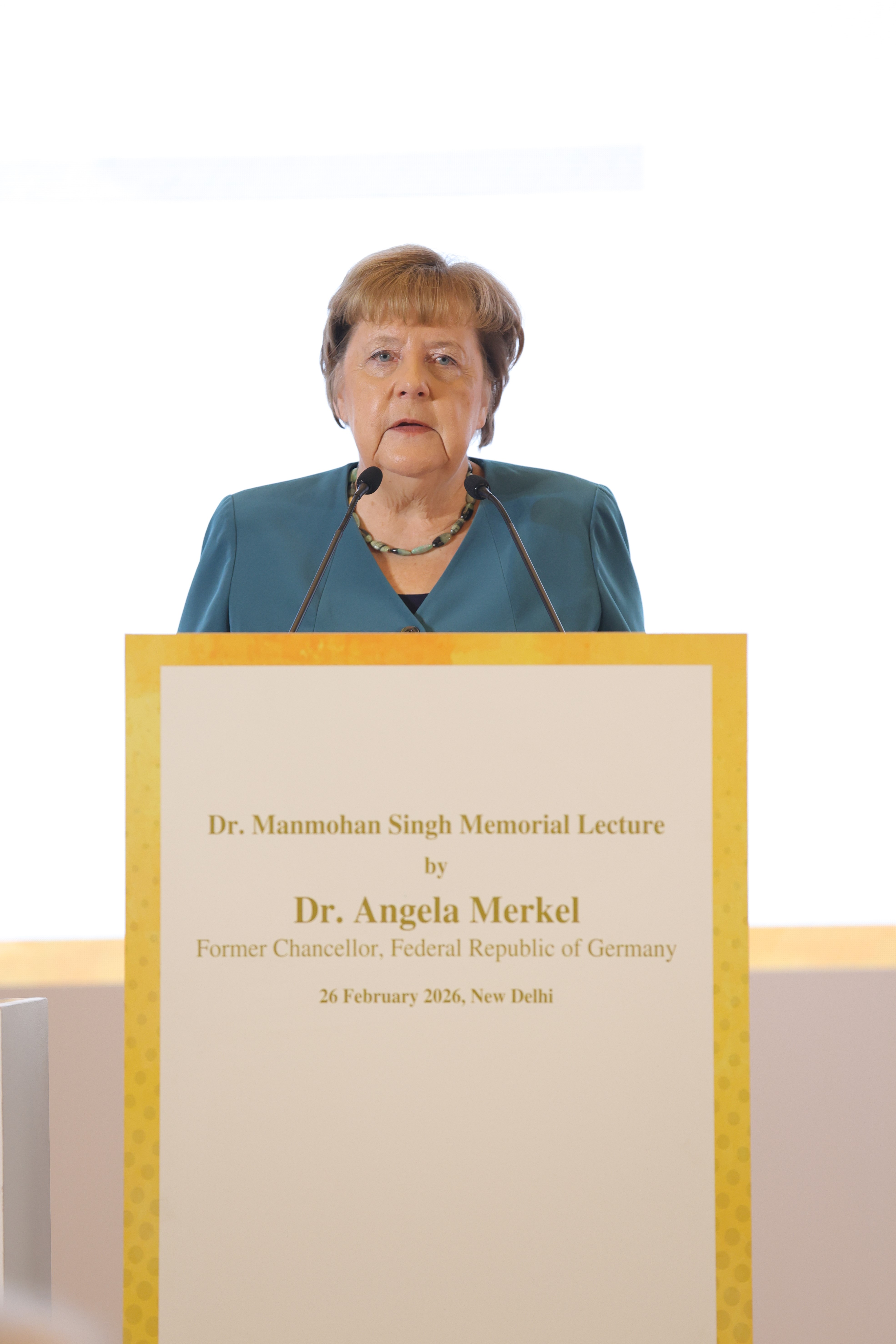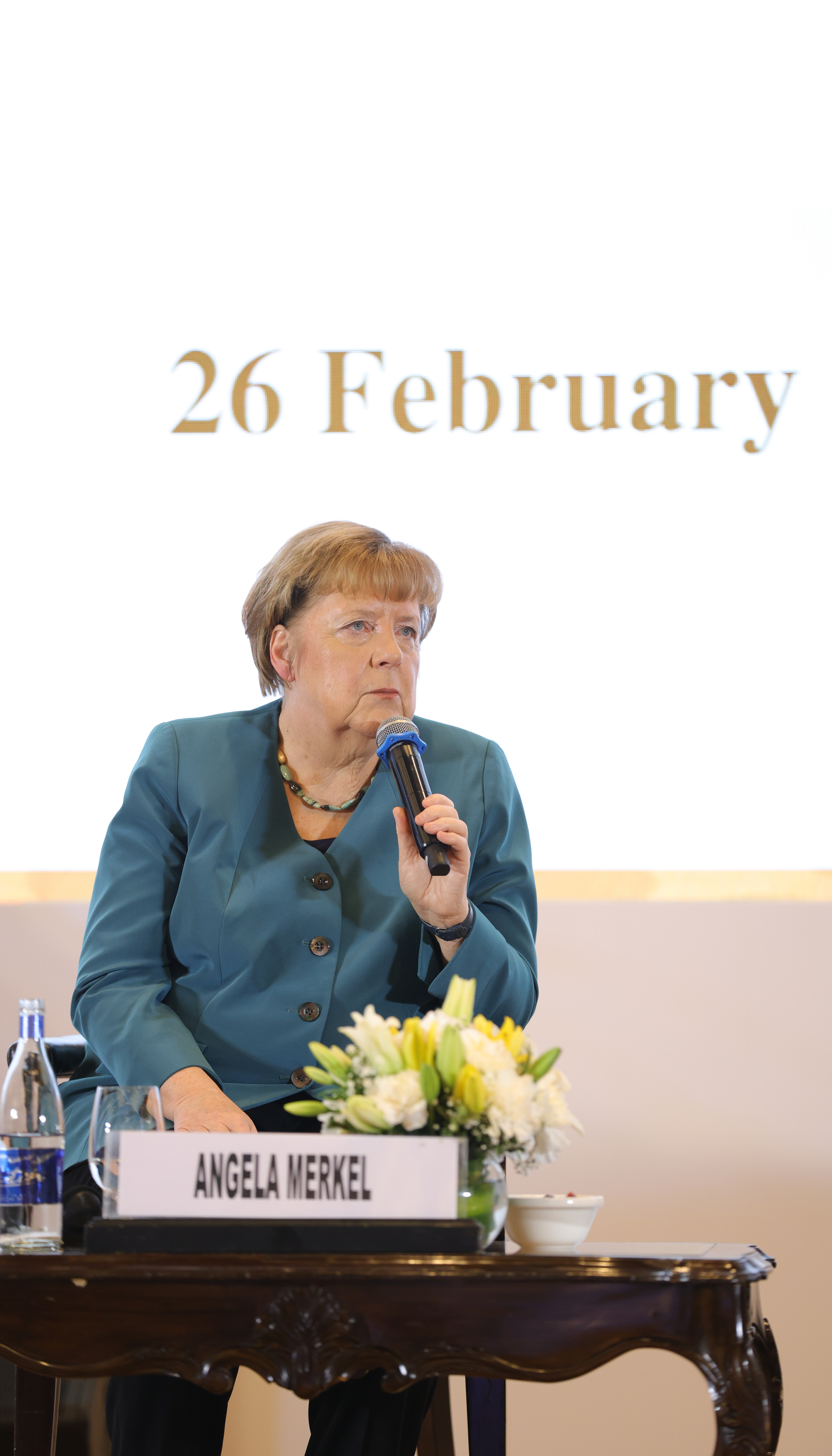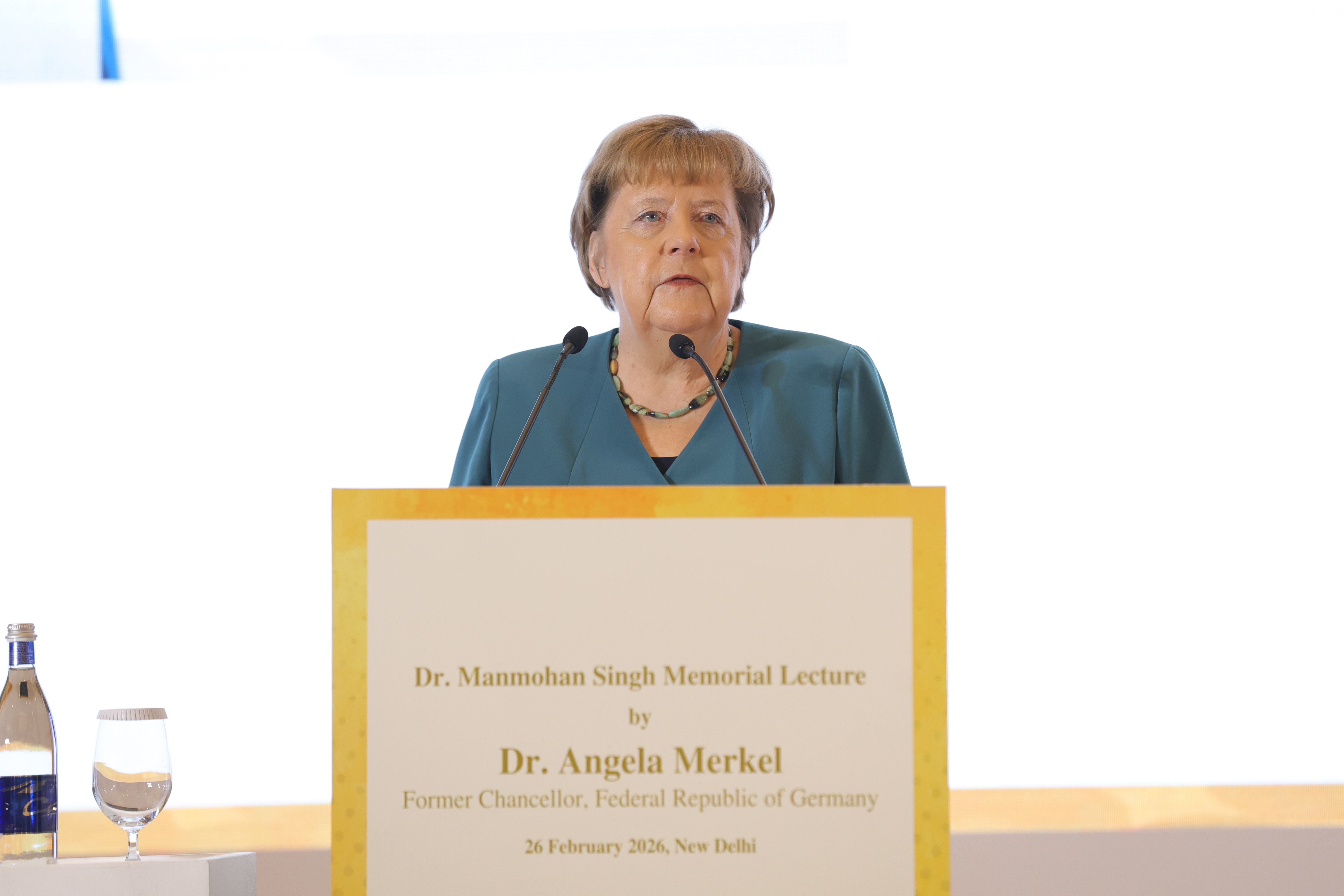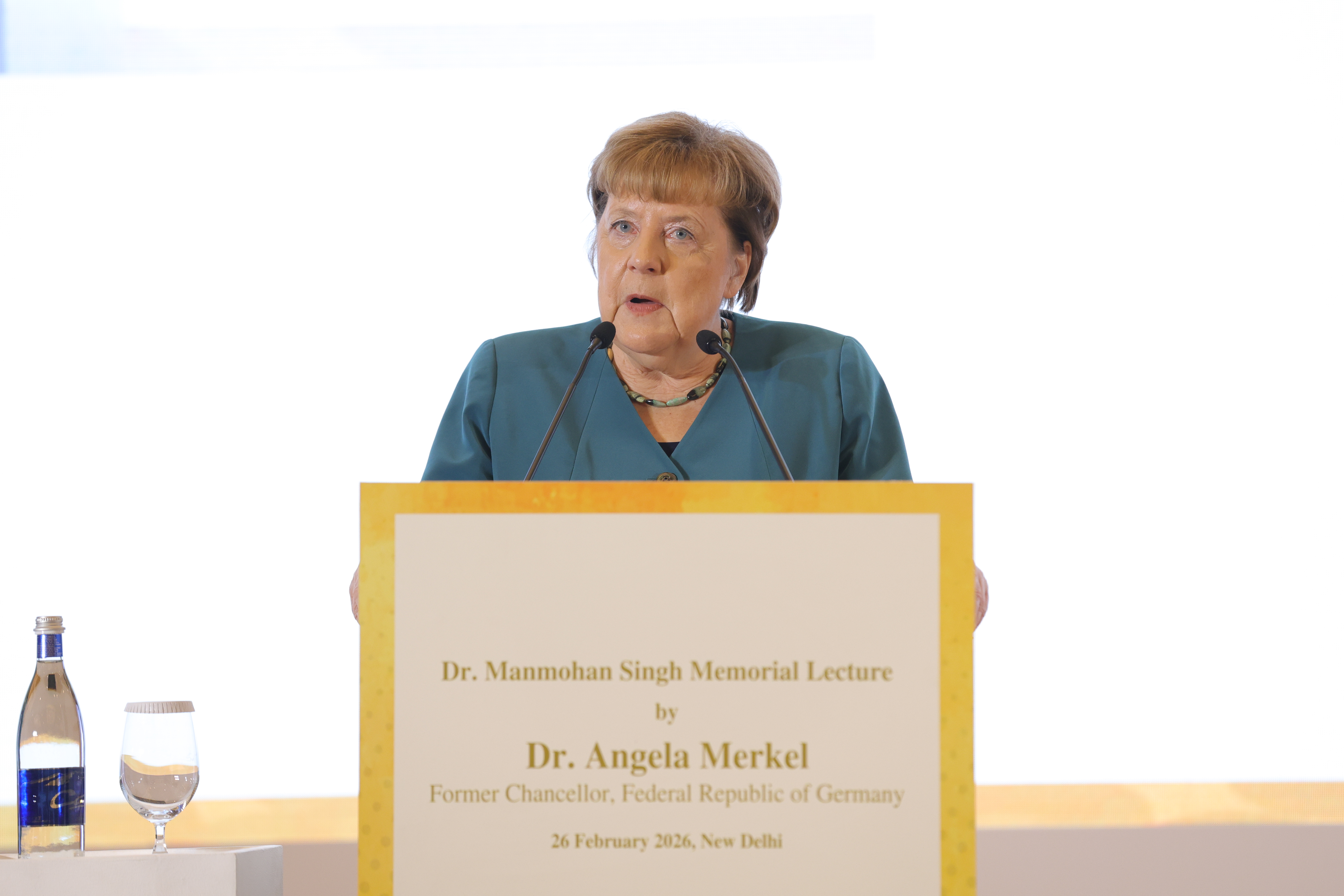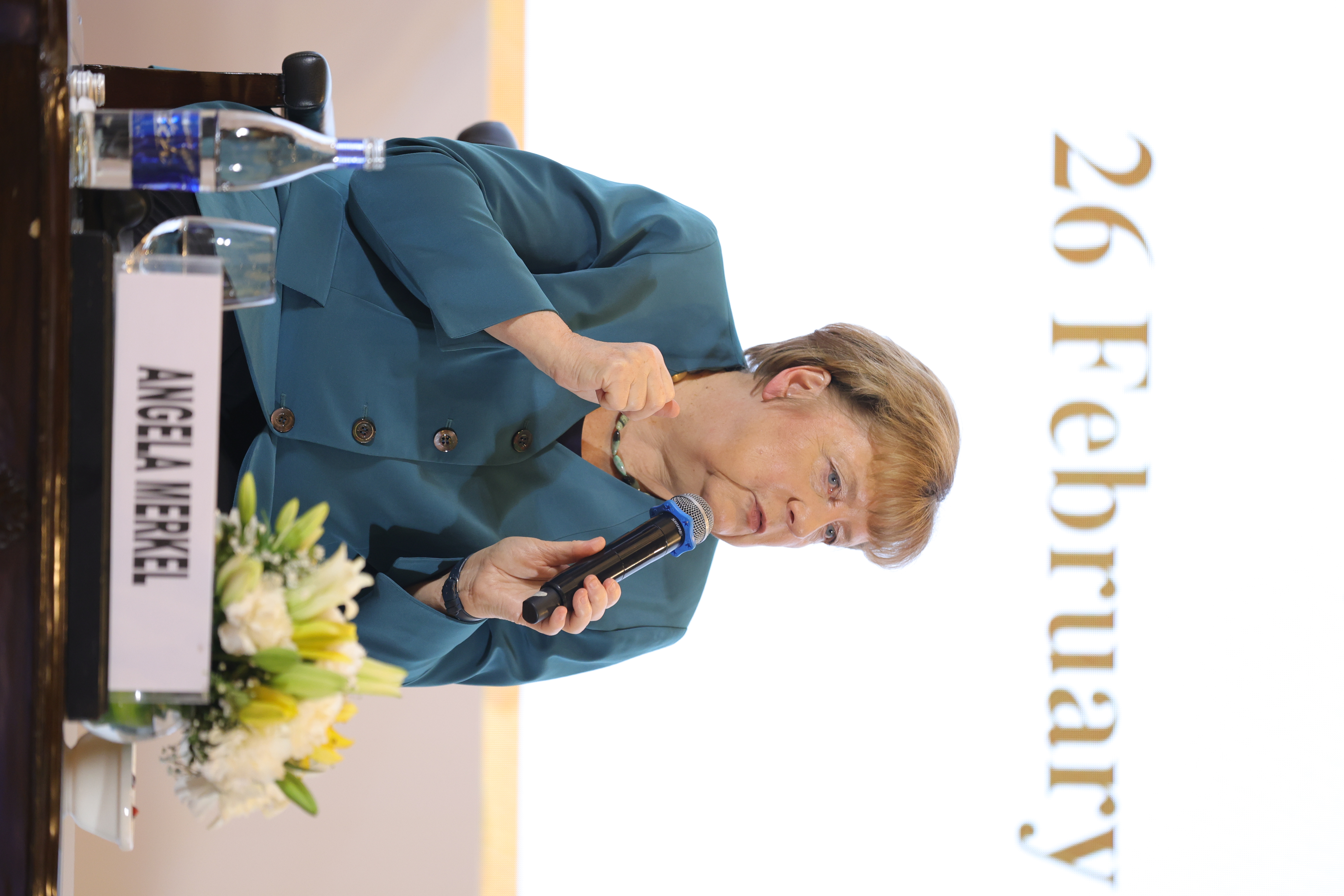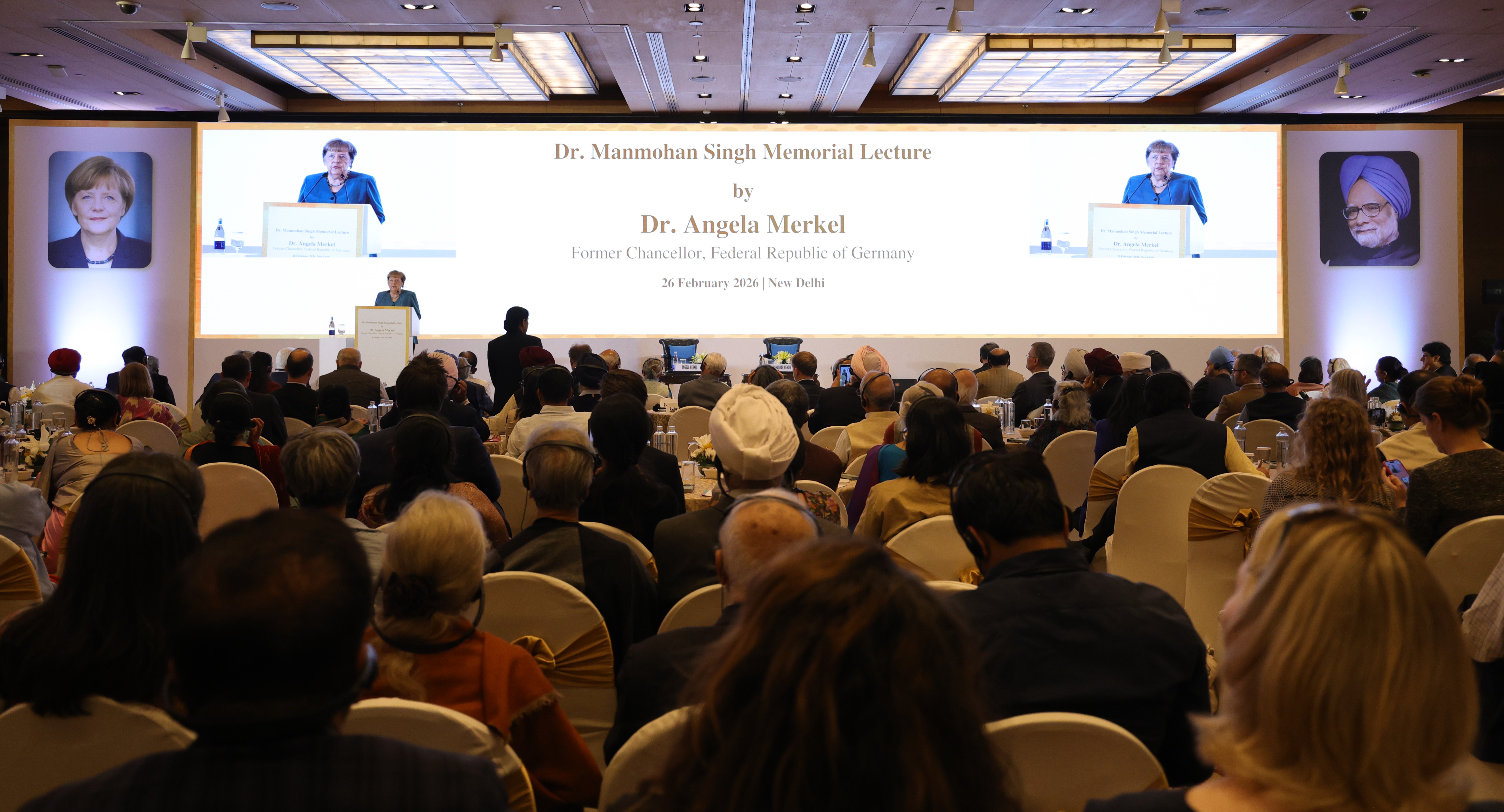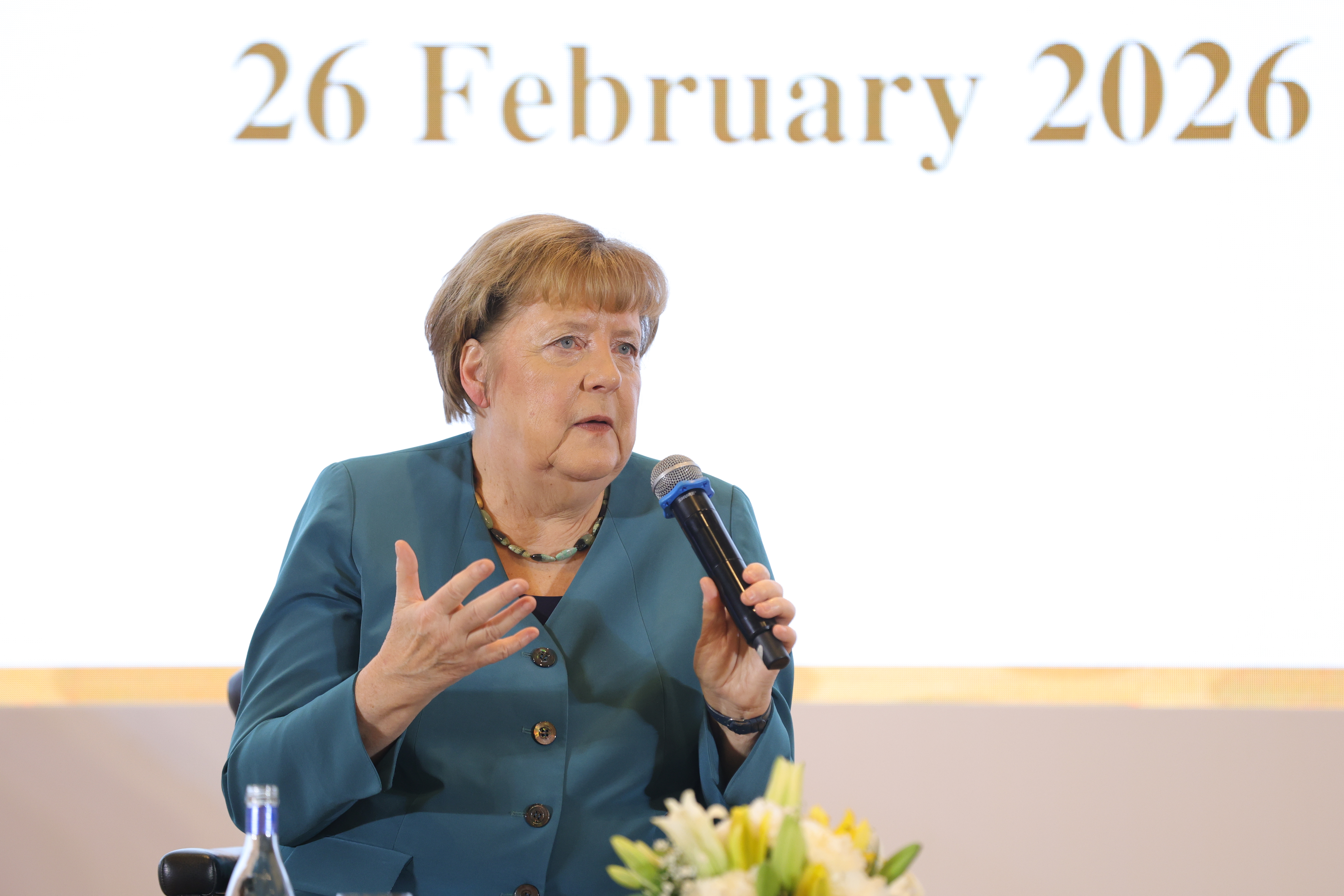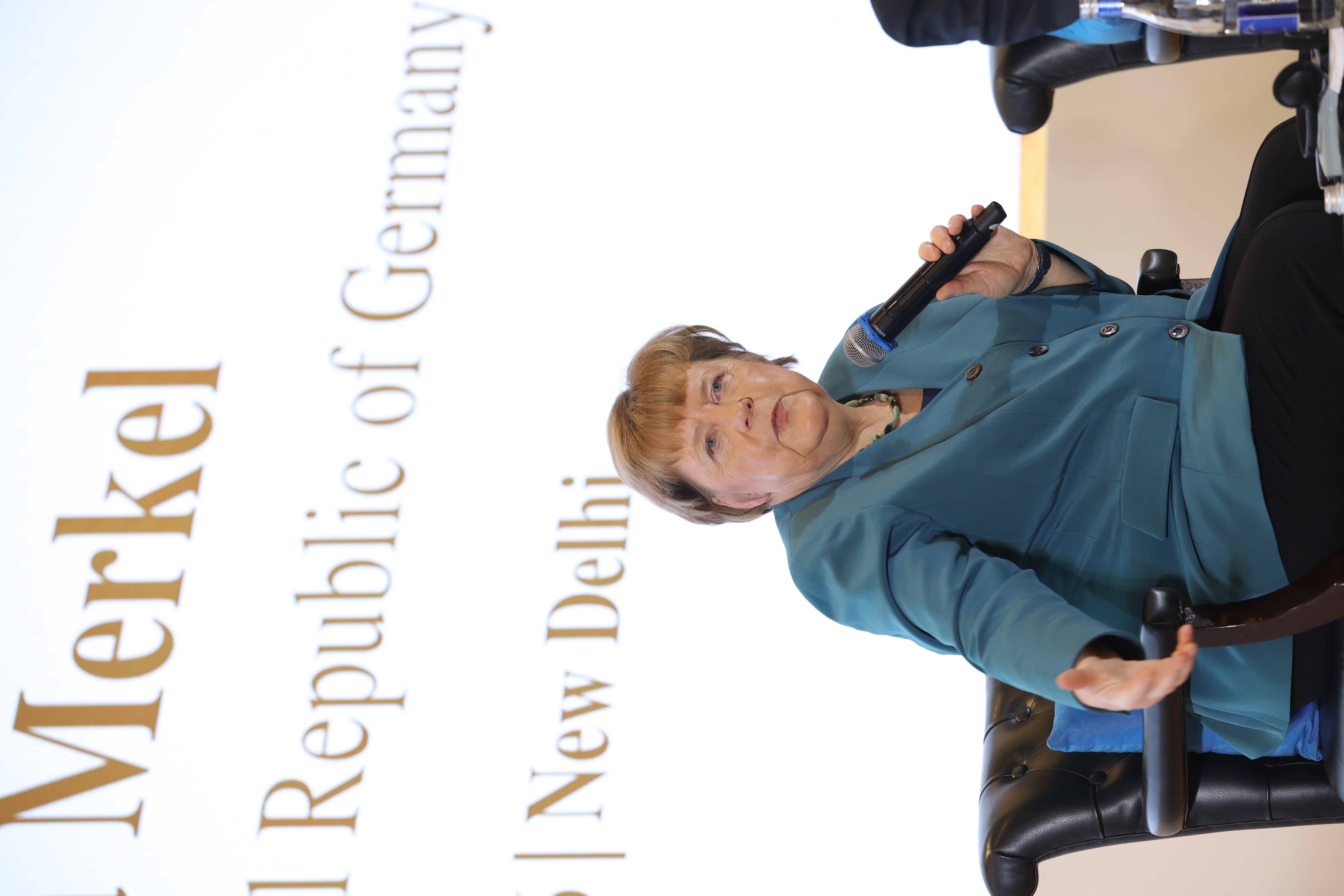
Dr. Angela Merkel, former Chancellor of the Federal Republic of Germany, delivered the inaugural lecture on 26 February 2026.
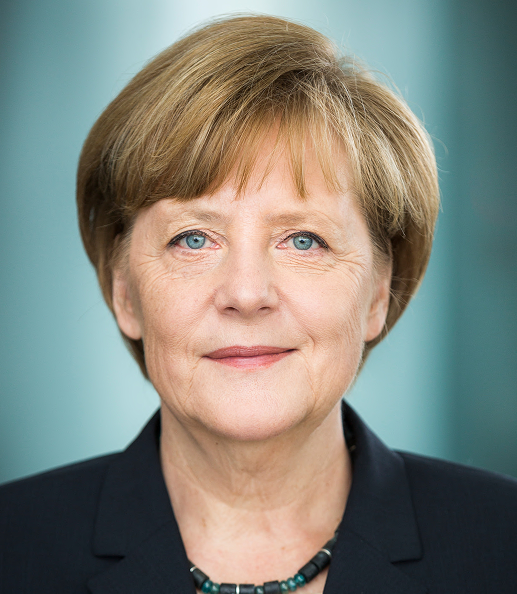
Dr. Angela Merkel is a distinguished statesperson and retired politician. After studying physics at Leipzig University (1973–1978), she conducted research in the field of quantum chemistry at the Central Institute of Physical Chemistry, Academy of Sciences of the German Democratic Republic (GDR), Berlin. She obtained her doctorate in 1986 with a thesis on quantum chemical calculation of the velocity constants for simple hydrocarbon reactions.
In 1989 Dr. Merkel joined the political party Demokratischer Aufbruch (Democratic New Beginning). Following the GDR’s first free general election in March 1990, she was appointed Deputy Government Spokesperson of the Lothar de Maizière Government. In August 1990 she joined the Christian Democratic Union of Germany (CDU). After German reunification in October 1990, Dr. Merkel was elected to the Bundestag. She served as Federal Minister for Women and Youth (1991-1994) and Federal Minister for the Environment, Nature Conservation and Nuclear Safety (1994-1998).
Dr. Merkel was a member of the Bundestag from 1990 to 2021. Deputy Chairperson of the CDU since 1991, she was elected as General Secretary of the party in 1998. From 2000 to 2018 she was Chairperson of the CDU. On 22 November 2005, Dr. Merkel was elected Chancellor of the Federal Republic of Germany, a position she held with distinction till 8 December 2021.
Her autobiography Freiheit: Erinnerungen 1954–2021 (Freedom: Memoirs 1954–2021), written with a coauthor, was published in 2024.
Dear Upinder Singh, Dear Daman Singh, Honorable Ambassador, Ladies and Gentlemen, In April 2025, a few months after the death of your father Manmohan Singh, you wrote to me, dear Upinder Singh, as his eldest daughter, and asked me to deliver the first lecture of the Trust named after your father in his honor, and thereby also to establish an annual tradition. I have gladly complied with this request.
Why?
First of all, out of very fundamental considerations. Throughout my entire active political life, the flourishing of German-Indian relations was close to my heart, and that remains the case today. Particularly during my 16-year term as Federal Chancellor from the end of 2005 to the end of 2021, I attached great importance to the cooperation between our two countries. This is why Manmohan Singh and I held the first German-Indian Intergovernmental Consultations in 2011 and continued them later on a biennial basis.
The strategic importance of our relations, as well as those of the European Union with India, is obvious to me: India and Germany are two democracies, with India being the largest in the world. The EU is the second-largest global economic power; Germany is the largest economy among its member states. Alongside China, India is one of the two states with more than a billion inhabitants—by now, India is the most populous country on earth. For many years, your country has shown annual economic growth of well over 5 percent and possesses a virtually inexhaustible economic development potential for the future. Compared to Germany, India has a young population; the average age is just under 30 years, whereas in comparison, people in Germany are on average 46.8 years old.